Using a normal folder as an email account
See also:
Parsing text from attached files
Differences between the Web and Windows apps
Normally, Email Parser connects to an email server (such as Gmail, Outlook, or any IMAP account) to receive incoming emails. However, if you are running the Windows version of Email Parser, you can also use a regular folder on your computer as an email account.
This means that as soon as a new file is placed in that folder, Email Parser will pick it up and treat it as a newly arrived email. How it handles the file depends on the file type:
- If the file is an .EML or .MSG file (standard email formats), it will be processed just like a regular email. All the usual email fields (From, To, Subject, etc.) will be populated with the actual values from the email.
- If the file is any other type (for example, a PDF, XML, or Word document), Email Parser will create a blank email with no sender, recipient, or subject. The file itself will appear as an attachment. To read its contents, see Parsing text from attached files.
This feature is very useful for quickly testing how Email Parser handles attached files without having to send actual emails.
Setting up a folder as an email account
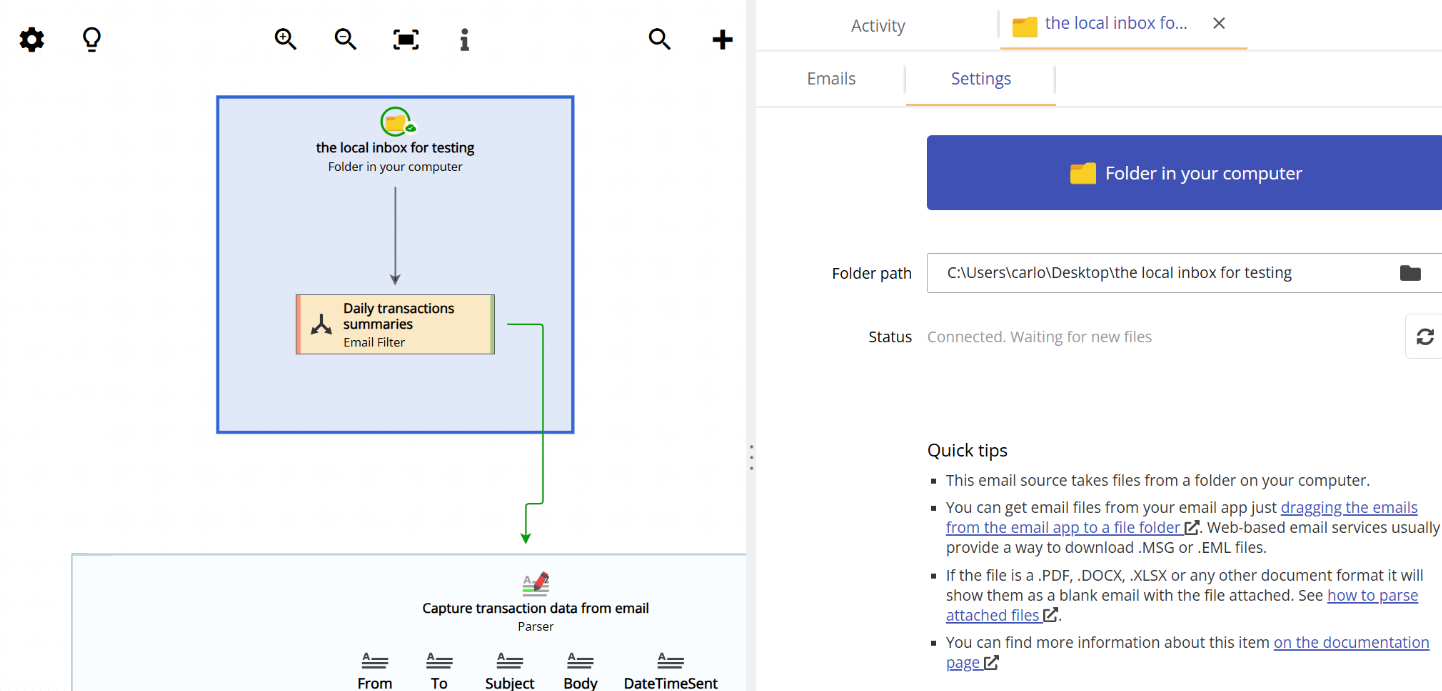
To set this up, select “Folder in your computer” from the email account type list. Then simply enter the path of the folder on your computer that you want Email Parser to monitor:
How Email Parser displays files from a folder
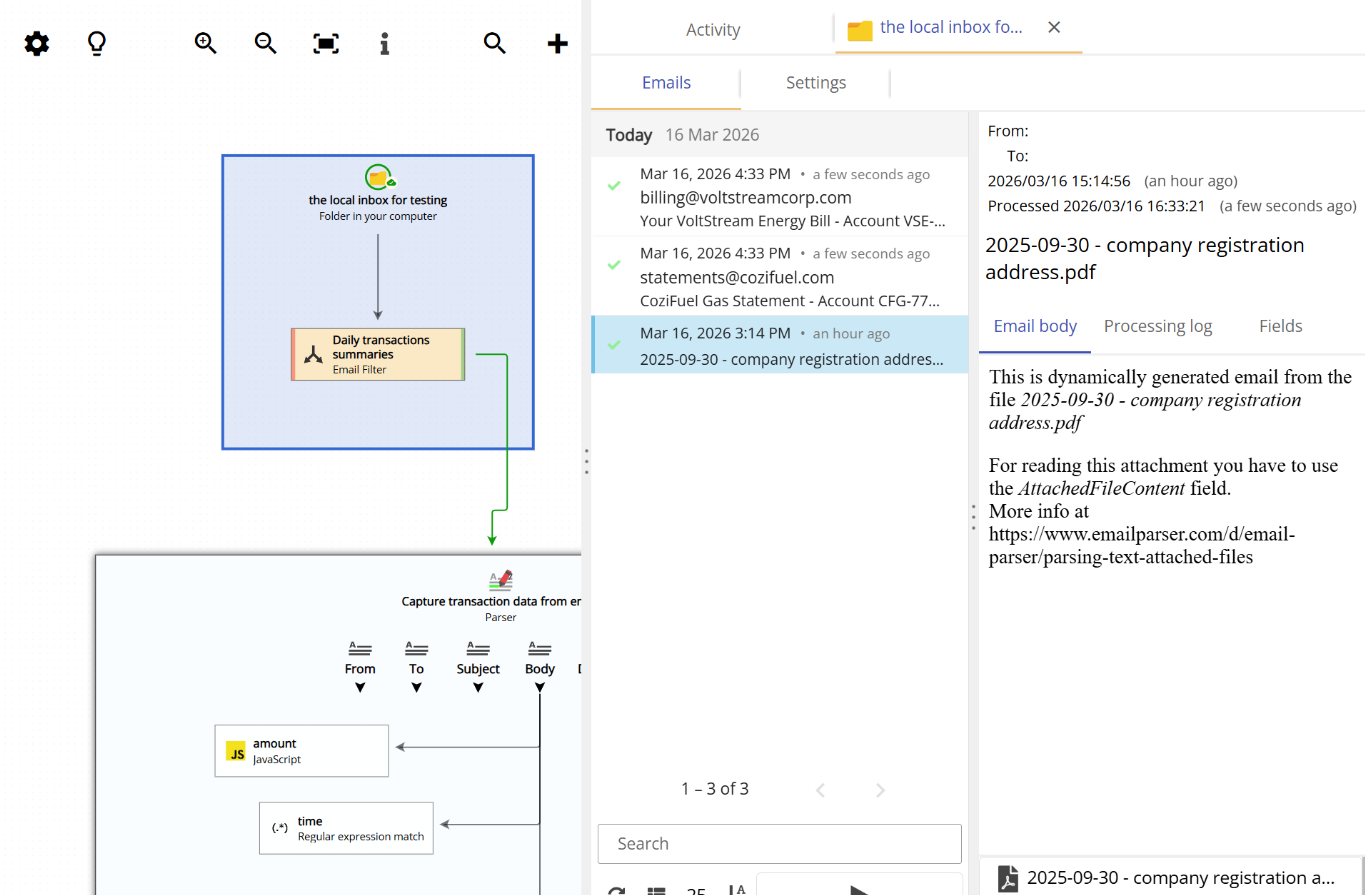
The screenshot below shows how Email Parser lists the contents of a local folder. Notice that the first two items are actual .eml files, so all the standard email fields (From, To, Subject, etc.) are properly filled in. The third item, however, is a .pdf file. Since it is not an email, Email Parser shows a blank email with the PDF attached:
How to get .MSG files from Outlook
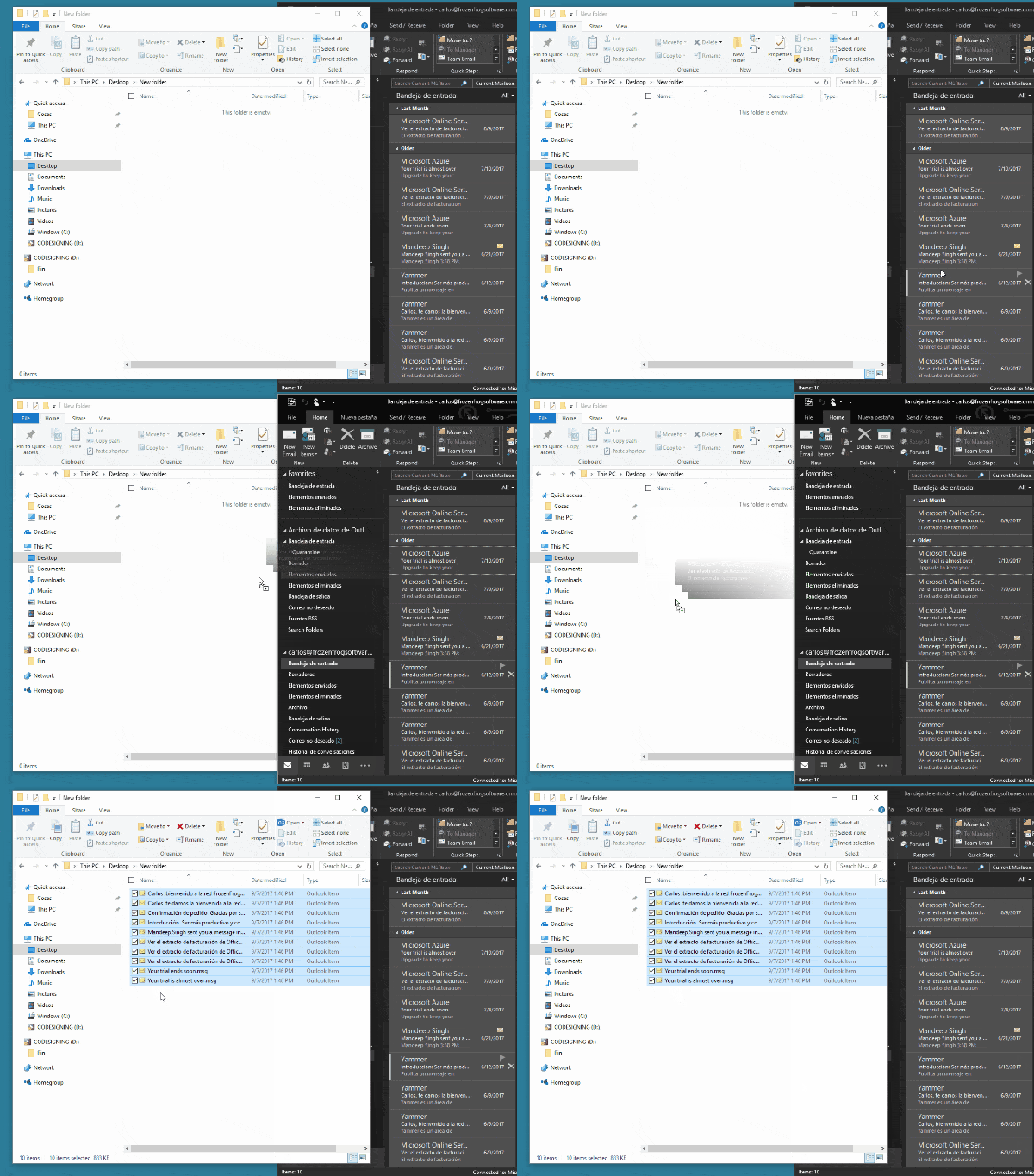
A quick way to parse emails from Outlook is to save them as files. You can do this by selecting the emails in Outlook and dragging them into a folder on your computer, as shown in the animation below. Note that this does not remove the emails from Outlook; it simply creates a copy:
How to get .EML files from Gmail
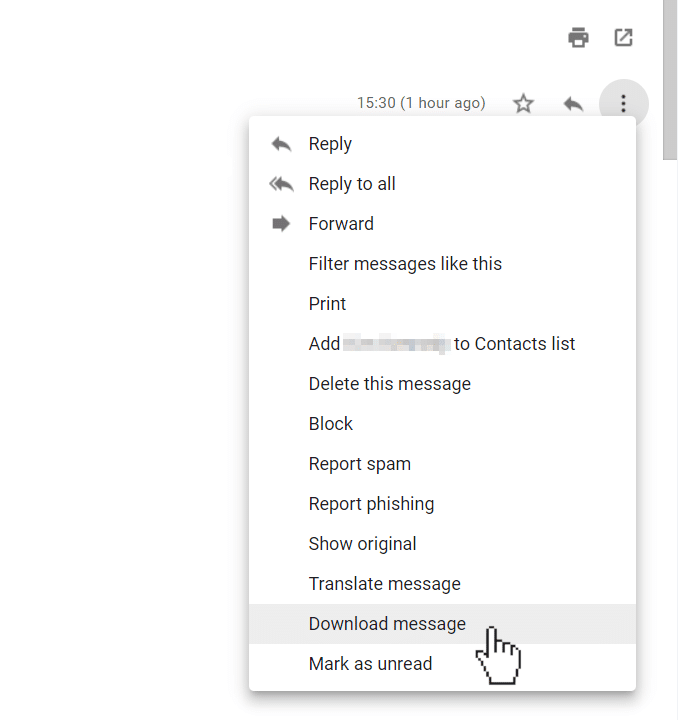
To download an .eml file from Gmail, open the email you want to save, click the three-dot menu on the right side, and select “Download message”:
Other email clients such as Mozilla Thunderbird and Windows Mail also provide similar ways to export emails to .eml or .msg files.